
Discover the Heritage Trail in Rochester, NY: History, Culture & Scenic Views
If you want to experience Rochester’s history while exploring the city on foot, the Rochester Heritage Trail NY is an excellent place to start. This downtown walking trail turns Rochester’s streets into an outdoor history lesson, connecting visitors with important people, places, events, and stories that helped shape the city.
The Heritage Trail is approximately 1.25 miles long and features 15 points of historical significance. Instead of following a traditional hiking trail through a park, visitors follow an 8-inch-wide granite or blue-painted line incorporated into city sidewalks. Along the route, historical markers, plaques, and interpretive signs explain Rochester’s development and heritage.
For visitors staying in Rochester, the trail is a convenient way to combine sightseeing, history, architecture, and a leisurely walk through downtown.
Table of Contents
- What Is the Rochester Heritage Trail?
- Where Does the Heritage Trail Start and End?
- What Can You See Along the Trail?
- Rochester’s Connection to Susan B. Anthony
- The Erie Canal and Rochester’s Growth
- The Genesee River and Rochester’s Industrial History
- How Long Does the Heritage Trail Take?
- Tips for Exploring the Trail
What Is the Rochester Heritage Trail?
The Rochester Heritage Trail is a self-guided historical walking tour designed to help visitors understand the city’s past while walking through downtown Rochester.
The route connects important locations associated with Rochester’s development, including transportation, commerce, government, activism, entrepreneurship, and the city’s relationship with the Genesee River.
The trail was developed through a public-private collaboration involving local history advocates, the City of Rochester, and other organizations. The first phase was installed in 2007 as part of the West Main Street Streetscape Improvement Project.
One of the best things about the trail is that you don’t need to join a scheduled tour. Visitors can explore it independently and stop to read the interpretive signs along the way.
Where Does the Heritage Trail Start and End?
The current Heritage Trail route runs between the National Susan B. Anthony Museum & House at 17 Madison Street and the second Erie Canal Aqueduct Bridge at 50 West Broad Street. The City of Rochester notes that a future extension is planned toward Rundel Memorial Library at 115 South Avenue.
Starting near the Susan B. Anthony Museum & House makes it possible to combine the walking trail with one of Rochester’s most important historic attractions.
The trail then continues through downtown, providing opportunities to explore additional landmarks, streets, businesses, and public spaces along the way.
What Can You See Along the Trail?
The Heritage Trail highlights many different aspects of Rochester’s history.
Interpretive topics along the route include:
- The power of the Genesee River
- Transportation and commerce
- Nathaniel Rochester and the city’s origins
- Government and commerce
- Child’s Basin
- Rochester’s development as a village
- Rochester’s history as a center of freedom
- Transportation crossroads
- Corn Hill and early wealth
- Susan B. Anthony and women’s rights
- Neighborhood transformation
These interpretive signs make the trail more than simply a walk through downtown. They provide context for the buildings, streets, waterways, and neighborhoods visitors encounter along the route.
Rochester’s Connection to Susan B. Anthony
One of the most significant stories connected with the Heritage Trail is Rochester’s role in the women’s rights movement.
Susan B. Anthony lived in Rochester and became one of the most influential advocates for women’s suffrage in American history. Her home is now the National Susan B. Anthony Museum & House, located at the western end of the Heritage Trail.
Visit Rochester also highlights Rochester’s connection to Anthony and other important historical figures, making the city an especially interesting destination for travelers interested in women’s history and civil rights. Visitors can make the Heritage Trail part of a larger history-focused day by touring the Susan B. Anthony Museum & House before or after their walk.
Learn more from the Official Susan B. Anthony Museum and House website.
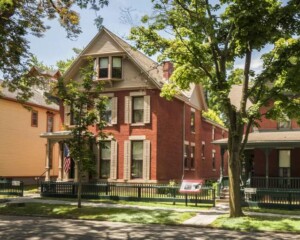
Susan B. Anthony Museum & House
The Erie Canal and Rochester’s Growth
Transportation played a major role in Rochester’s development.
The Erie Canal helped transform communities throughout New York by creating an important transportation and commercial connection across the state. Rochester’s location along the canal contributed significantly to the city’s growth.
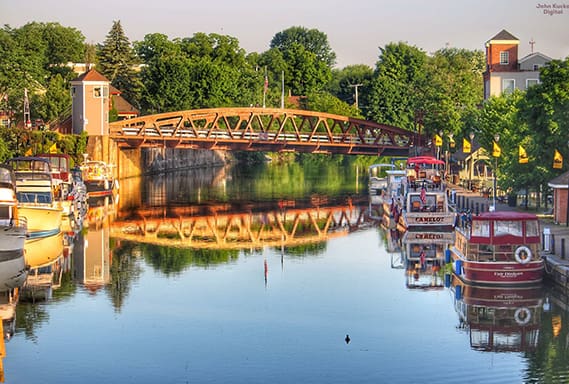
The Heritage Trail includes the historic Erie Canal Aqueduct area, giving visitors an opportunity to see how transportation infrastructure influenced Rochester’s development.
The trail’s interpretive material also explores transportation and commerce, helping visitors understand why Rochester became an important regional center.
The Genesee River and Rochester’s Industrial History
The Genesee River is another major part of Rochester’s story.
The river provided waterpower that contributed to Rochester’s early industrial development. Today, visitors can see the dramatic High Falls area and explore other river-related attractions throughout the city.
High Falls is particularly important to Rochester’s identity. Visit Rochester describes the waterfall as a 96-foot feature in the center of the city that played a role in Rochester’s industrial development.
For travelers interested in seeing more of the river, consider combining the Heritage Trail with portions of the Genesee Riverway Trail, which connects historic districts, landmarks, parks, and attractions throughout Rochester.

Genesee Riverway Trail
How Long Does the Heritage Trail Take?
The Heritage Trail is approximately 1.25 miles, making it manageable for most visitors looking for a shorter downtown walking experience.
The actual time required depends on how often you stop.
If you simply walk the route, it can be completed relatively quickly. However, visitors interested in Rochester history should allow extra time to read the interpretive signs, take photographs, explore nearby landmarks, and visit attractions along the route.
For a relaxed experience, consider setting aside approximately 1–2 hours for the trail and nearby stops.
Tips for Exploring the Trail
1. Wear Comfortable Shoes
Although the Heritage Trail is an urban walking route, you’ll be spending time on sidewalks and city streets. Comfortable walking shoes are recommended.
2. Take Your Time
Don’t rush from one marker to another. The purpose of the trail is to learn about Rochester’s history, so give yourself time to read the signs.
3. Bring Your Phone or Camera
Downtown Rochester has plenty of interesting architecture, historic sites, public spaces, and river views that are worth photographing.
4. Combine It With Other Attractions
The Heritage Trail works particularly well as part of a larger Rochester sightseeing itinerary.
Where to Stay in Rochester
If you’re planning a trip to Rochester NY, staying in a comfortable location nearby makes the experience even easier.
Our Rochester Places properties offer:
• Fully equipped kitchens
• Comfortable living spaces
• Easy access to downtown attractions
• Convenient locations near museums and restaurants
Browse our accommodations here at Rochester Places.
The Rochester Heritage Trail is a simple but meaningful way to discover the city’s history. Its 1.25-mile route connects important locations and stories involving Rochester’s founders, transportation, commerce, the Genesee River, women’s rights, and the development of downtown.
What makes the trail particularly appealing is that visitors can explore it at their own pace. You don’t need to be a history expert or spend an entire day sightseeing. Simply follow the trail markers, read the interpretive signs, and take time to appreciate the historic surroundings.
For anyone looking for an affordable, educational, and walkable Rochester experience, the Heritage Trail is an excellent addition to a Rochester vacation.
Whether you’re a first-time visitor, a history enthusiast, or a local looking to learn more about the city, the Heritage Trail offers a fascinating glimpse into the people and events that helped make Rochester what it is today.